The energy industry demands higher precision than ever to mitigate risk in both exploration and production.
PetroStrat has expanded its laboratory capabilities beyond routine screening to offer a suite of advanced Rock-Eval 6 methodologies. The innovation lies in adapting Rock-Eval 6 beyond conventional applications to uncover previously overlooked variations in hydrocarbon potential, kerogen classification, and depositional environment indicators.
We provide high-fidelity data that help our clients address specific geological challenges by utilising the full capabilities of the Rock-Eval 6 instruments. Our expert team now offers specialised Bulk Rock, Pure Organic Matter, Reservoir Stain, Multi-Heating and Shale Play methods to extract ever more actionable insights from rock samples. By integrating diverse analytical methodologies we aimed to refine precision and expand interpretative capabilities.
We bridge the gap between lab results and strategic investment decisions.
What is Rock-Eval 6?
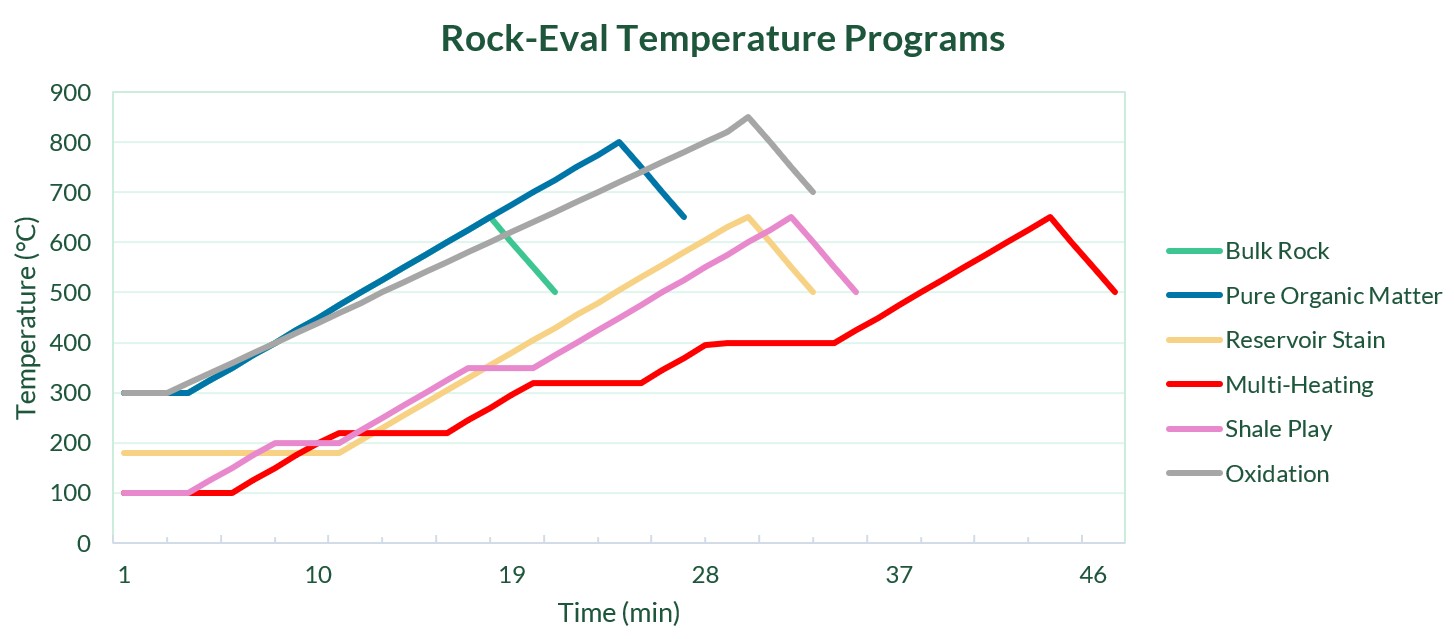
Rock-Eval 6 is conventionally used as the industry standard for geochemical characterisation of source rocks. It deploys controlled heating programmes to release hydrocarbons from a rock sample in stages. This process both expels adsorbed hydrocarbons trapped in the rock pores and simulates the natural thermal maturation of organic matter, but at an accelerated laboratory scale.
For a decision maker, this technology represents a valuable de-risking tool. By measuring the quantity, type, and thermal maturity of organic matter, Rock-Eval 6 provides the “ground truth” for your basin models.
Digging deeper – new analytical protocols now available in Rock-Eval 6
We offer five distinct Rock-Eval 6 protocols, offered as part of our geoscience service packages that are tailored to your specific project requirements.
Bulk Rock Method
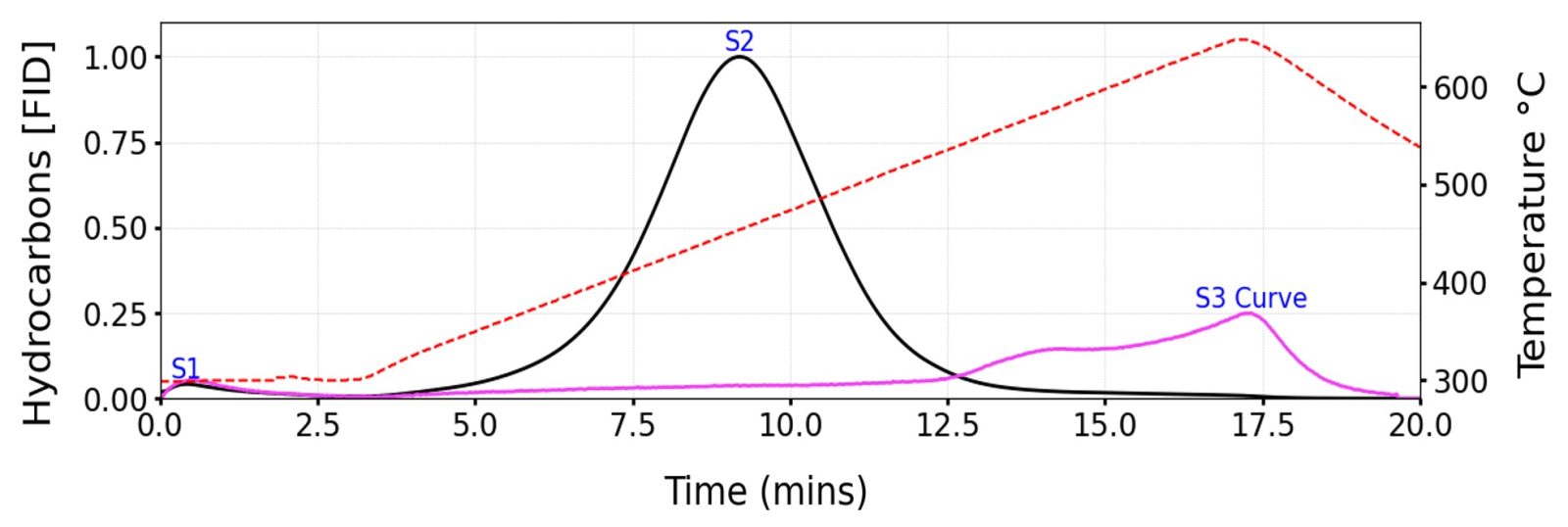
Rapid screening of large sample sets for efficient source rock evaluation. This remains the standard for identifying intervals of interest and determining residual petroleum potential.
Pure Organic Matter / Kerogen Method (New)
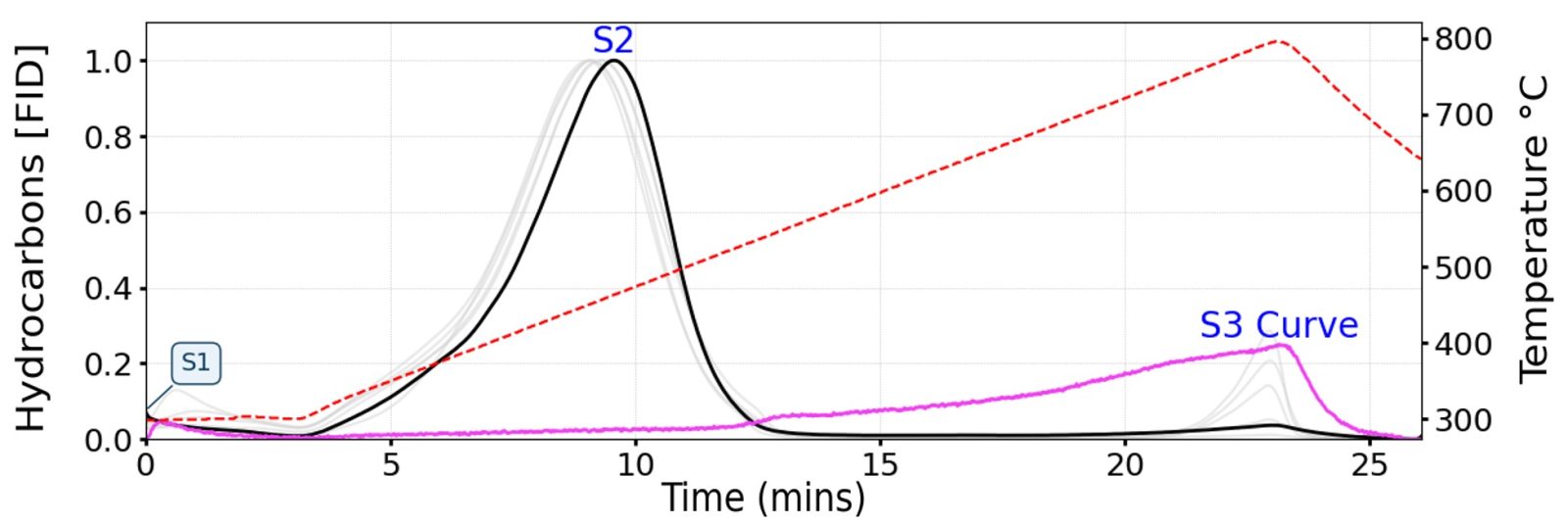
Characterise organic properties without interference from the mineral rock matrix. This protocol is essential for isolated kerogens and coals, as well as samples with high total organic carbon and soils enriched in organic content. The protocol provides precise Hydrogen Index (HI) and Oxygen Index (OI) data for advanced basin modelling.
Multi-Heating Method
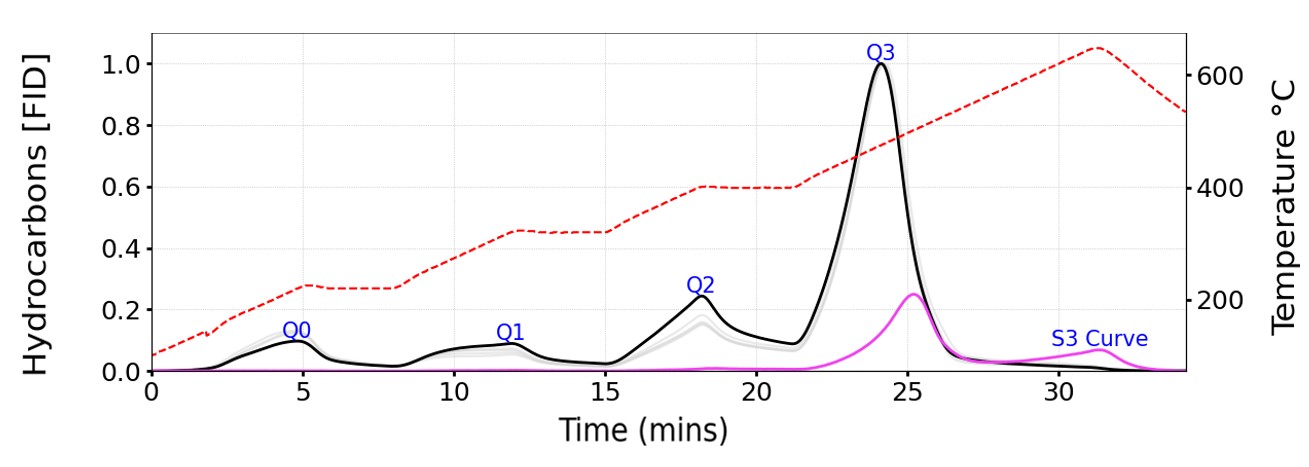
Resolve peaks on contaminated samples. Multiple heating rates enable a step-by-step release of hydrocarbon cuts, effectively separating light contaminants (Q0-Q2) like Oil Based Mud (OBM) from hydrocarbons derived from kerogen pyrolysis (Q3).
Reservoir Stained Method (New)
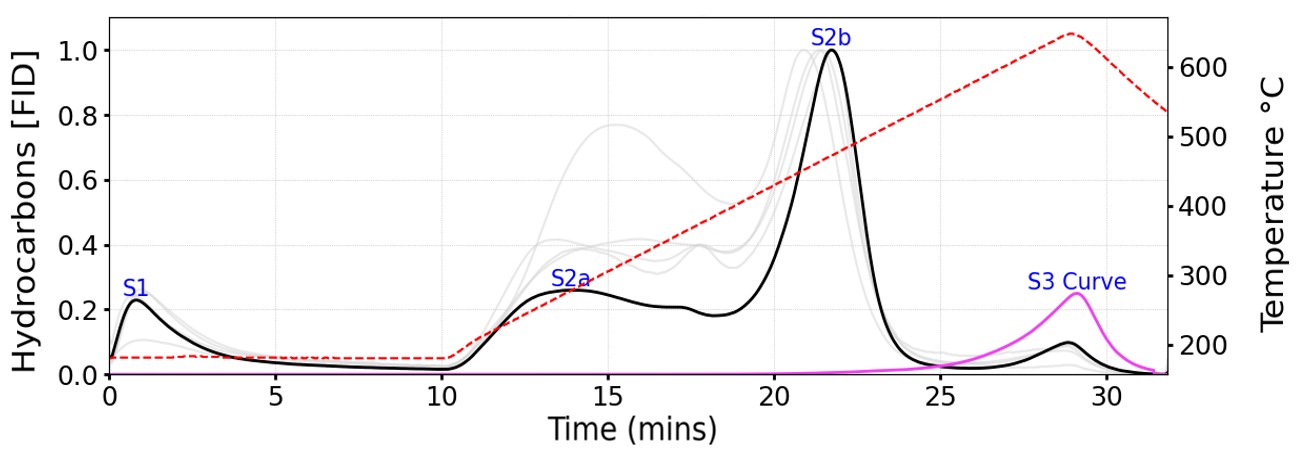
Provides vital data to identify migrated hydrocarbons and characterise oil quality, in addition to detection of heavy components like tar mats or pyrobitumen (S2b). This method differentiates light and heavy hydrocarbon fractions (C1 to C40) to identify sweet spots and reservoir compartmentalisation.
Shale Play Method (New)
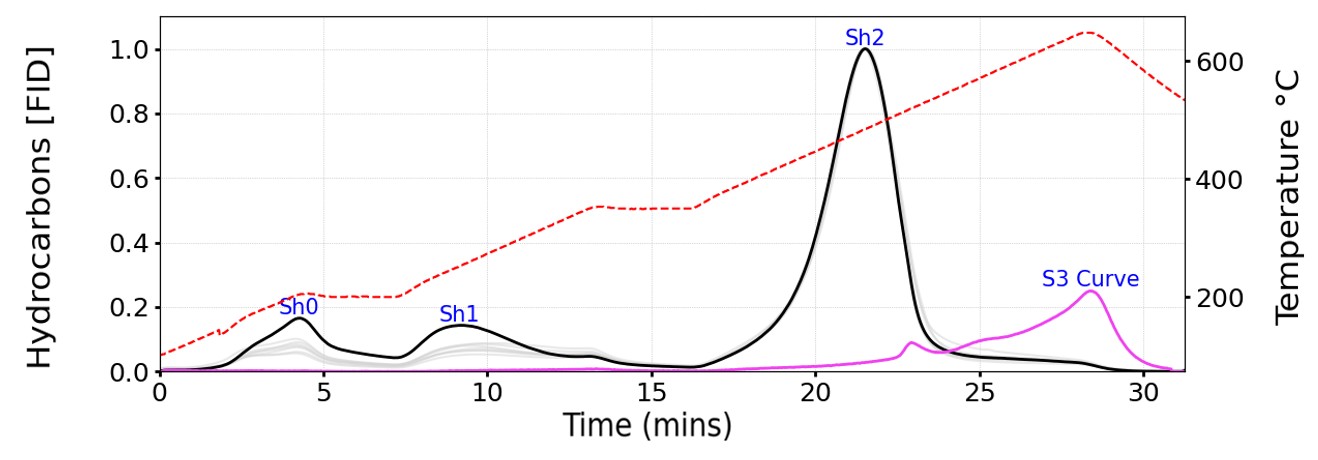
Quantify in-situ hydrocarbons in unconventional source rocks, such as tight and hybrid shale gas or oil plays. By starting pyrolysis at a lower temperature (100°C), we are able to analyse free volatile hydrocarbons adsorbed in the rock pores (Sh0 and Sh1) and correlate them with the generation potential of the organic matter in the source rock (Sh2).
Applications – Using Rock-Eval 6 to solve subsurface challenges for our clients
Our advanced Rock-Eval 6 protocols provide the high-fidelity data necessary to ground truth subsurface models, supporting informed decision-making across a wide variety of scenarios and plays. Including;
- Conventional source rock screening.
- Isolate signals in contaminated samples. Source rock screening evaluation on samples contaminated with OBM (Oil Based Mud) or other contaminants.
- Refining basin models. Obtaining reliable data for kinetic modelling and PSA inputs
- Identifying tar mats in complex reservoir settings.
- Mapping migration pathways. Identify reservoir staining and migration routes.
- Characterise unconventional reservoirs. Recognising oil-in-place in unconventional shales.
How Innovation and geochemical precision reduces subsurface uncertainty

- Manage exploration risk: Through accurate identification of oil and gas generating intervals, and a clearer understanding of source rock maturity and connectivity. This can save rig time by minimising risk of costly drilling of dry holes.
- Reduce operational uncertainty: Our rapid screening identifies source potential early in the project lifecycle. By efficiently identifying the most promising subsurface targets, our data can facilitate more informed decision-making throughout the project.
- Data reliability: Distinguish indigenous signals from mixed contamination. Understand the true potential of your subsurface assets.
- Reservoir connection/compartmentalisation: Recognise stained reservoirs and migration routes, as well as analytically identify which zones are connected to others due to their geochemical signature.